
Table of Contents
Technology Panic as a Historical Echo
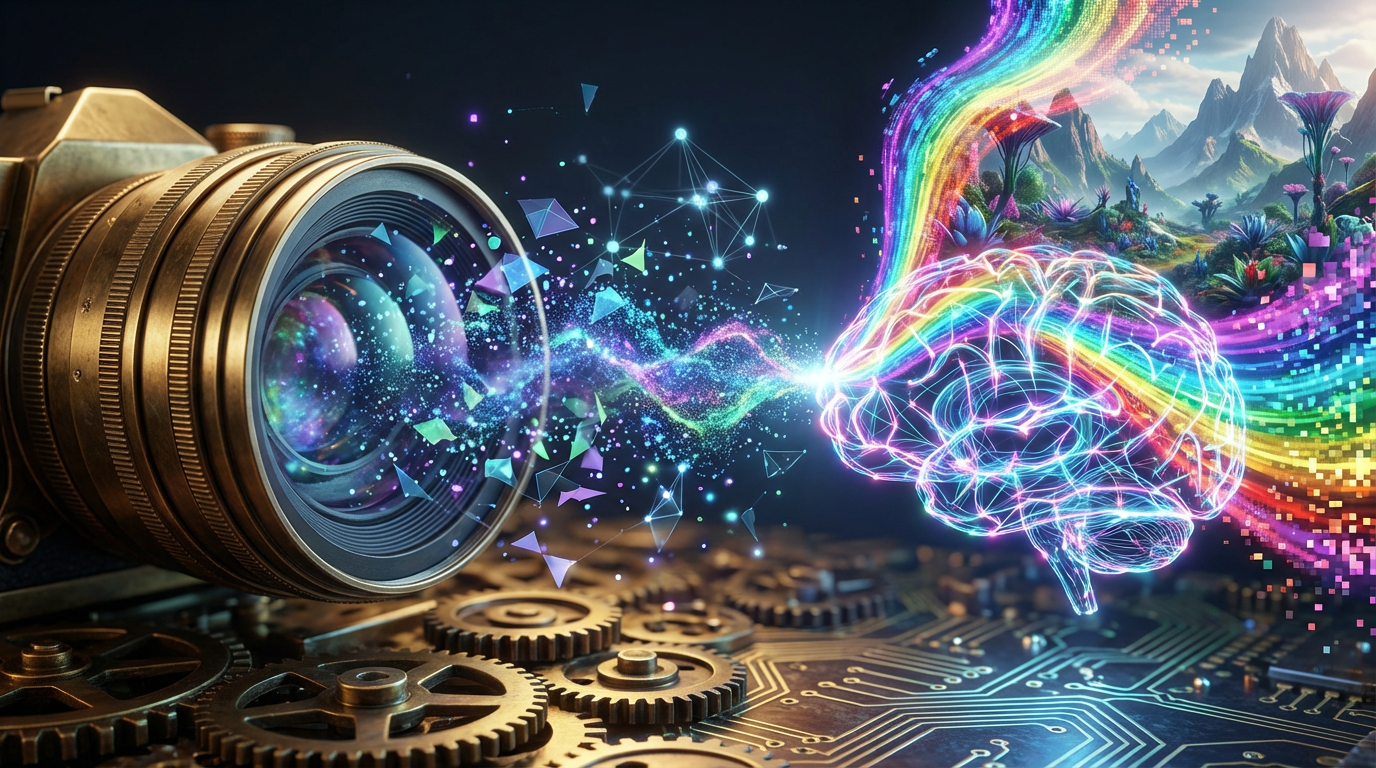
The history of humanity is a cyclical process of evolution in which the desire to record and reproduce reality is continuously reshaped by technological innovations. The birth of every new medium has created a seismic impact on the established art forms and craft practices preceding it, leading to existential crises and prophecies of “the end of art.” Today’s greatest panic, the anxiety of “Will artificial intelligence finish photography?”, is a direct 21st-century echo of the “Painting is dead” fear that descended upon the art of painting with the invention of photography in the mid-19th century. This article handles these two major breaking points of visual culture—the birth of chemical photography and the rise of algorithmic image production (AI)—through a comparative, historical, and ontological perspective.
In my view, just as the invention of photography did not destroy the art of painting, Artificial Intelligence is not destroying photography; on the contrary, it is expanding the field of visual expression by creating an entirely new discipline called “Synthography.” Just as photography liberated painting from the burden of documenting reality and opened the door to modernism, AI is purifying photography from the necessity of “representation” and technical drudgery, allowing it to be revalued around the axes of “experience,” “witnessing,” and “human connection.” Mark this well: “experience, witnessing, and human connection”! I have tried to draw attention here, and let me explain what this means to me. An AI-assisted camera is a tool that will now save photographers from the trouble of long adjustments and trial-and-error, allowing these three factors—experience, witnessing, and human connection—to rise. In the following sections, let us examine this transformation process through historical parallels, the philosophical differences of production technologies (ontology), the aesthetics of new art forms, and professional market dynamics.
The Trauma of 1839 and the “Death” of Painting: The First Great Rupture
The Shock of the Daguerreotype and Paul Delaroche’s Prophecy
The year 1839 is accepted as an irreversible milestone in the history of visual arts. With Louis Daguerre announcing the “Daguerreotype” method in France and William Henry Fox Talbot announcing the “Calotype” method in England, for the first time in human history, an image could be fixed solely through physical and chemical processes without the direct intervention of the human hand. This development created a massive shockwave for the art of painting, which had held the monopoly on imitating reality (mimesis) for centuries.
The statement allegedly uttered by French painter Paul Delaroche upon seeing the first Daguerreotype sample, “From today, painting is dead!”, is the most iconic expression summarizing the mood of this era. Delaroche’s reaction was not merely an expression of professional jealousy, but of an ontological tremor. Until that day, producing a “realistic” image depended on the artist’s talent, power of observation, and manual skill; the camera mechanized this process, allowing nature to “draw itself.” Fox Talbot’s claim that his house “drew its own picture” reinforced the perception that the artist’s role was reduced from “creator” to “operator.”

The intellectual atmosphere of the period was filled with a deep mixture of suspicion and fascination regarding this new technology. The poet and art critic Charles Baudelaire, in his critiques on the Salon of 1859, characterized photography as art’s “mortal enemy” and feared that this technology would reduce art to merely copying external reality, destroying imagination and the spirit. According to Baudelaire, photography could, at best, be the “humble servant” of the sciences and arts; it could be used to keep scientific records or aid memory, but it could never attain the status of “Art.” These arguments are almost identical to the discussions conducted today regarding the “soullessness” and “mechanical nature” of AI Art.
The Collapse of the Portrait Market and the End of Miniature Painting
The most concrete and devastating economic impact of photography’s invention was felt in the portrait painting market. In the early 19th century, commissioning a portrait was the only way for the nobility and the rising bourgeoisie to display status and record memory. This demand constituted a livelihood for thousands of “miniature portrait painters.” However, the incredible level of detail offered by the Daguerreotype (more detail than the human eye could see), its speed, and its relatively affordable cost shook this market to its core.
Research shows that shortly after the invention of photography, by the 1850s, studios in Paris were producing over 100,000 portraits annually. The middle class now demanded “objective” photographic portraits, which were closest to reality, instead of expensive and time-consuming oil paintings. Even the fact that models appeared “expressionless” and “stiff” due to the long exposure times of the period did not dampen this demand. In this process, many skilled but not genius artisan painters were left unemployed, and many were forced to work as “retouchers” or “colorists” in photography studios. This is an early and striking example of labor displacement caused by technology.
The Liberation of Painting: Impressionism and Modernism
However, history has shown that, contrary to Delaroche’s prophecy, painting did not die; on the contrary, it was “reborn.” Photography undertaking the task of “documenting reality” paradoxically liberated painting from this burden. Painters no longer felt obliged to draw the leaves of a tree, the texture of a fabric, or an architectural detail in a photorealistic manner; because photography could already do this better, faster, and cheaper.
The lifting of this obligation pushed artists to seek what the “camera could not see”: Light, color, emotion, impression, and internal experience. The Impressionism movement blossomed precisely as a result of this technological pressure. Masters like Claude Monet and Pierre-Auguste Renoir focused on reflecting the vibrations of color and the fleeting effects of light onto the canvas, in response to the black-and-white and static nature of photography at that time. While photography “froze” the moment, painting tried to capture “fluid” time.
Even more interestingly, the aesthetic flaws and technical features of photography also became a source of inspiration for painters. Painters like Edgar Degas carried the logic of “cropping” found in photographic frames—cutting figures off at the edge and asymmetric compositions—into their paintings, breaking classical composition rules. Van Gogh, by trying to reflect “character” and “emotion” rather than physical resemblance in his portraits, aimed for a depth that photography could not reach (at that time). In summary, photography did not kill painting; it liberated it from the chains of mimesis (imitation), paving the way for abstract art and modernism.
An Ontological Abyss: Differences Between Photography and AI
In light of the latest developments, the fact that “Artificial Intelligence has created a new field” is now an undeniable reality; this is technically and philosophically profoundly true. Most contemporary debates stem from the misconception that images produced by Artificial Intelligence (AI) are a digital evolution of photography. However, these two media reside at existentially (ontologically) opposite poles.
The Ontology of Photography: Light, Index, and “That-Has-Been”
Photography, by its etymological origin, means “writing with light” (photo-graphy). Whether it is the silver nitrate plates of the 19th century or today’s digital CMOS sensors; “physical contact” lies at the foundation of photography. For an image to be considered a photograph, the existence of a physical reference (an object, a person, a landscape) and the light falling upon this reference passing through an optical system to leave a trace on a sensitive surface is mandatory.
The French structuralist thinker Roland Barthes, in his work Camera Lucida, explains this unique feature of photography with the concept of “Noeme” and names it “That-Has-Been” (Ça-a-été). According to Barthes, when we look at a photograph, what shakes us is not the aesthetic beauty, but the unshakable belief that the object or person was physically present in front of the camera at a moment in history, and that existence is connected to the photograph like an “umbilical cord” through rays of light. A photograph is a sign directly related to reality, it is “indexical”; like a footprint or a fingerprint, it is proof of an existence.
Susan Sontag also emphasizes this “evidentiary” quality of photography in her work On Photography. She states that photographs are pieces of the world, miniatures of reality. The photographer, as the “eye” behind the machine, is a witness who selects that moment, frames it, and tears it from history.
The Ontology of Artificial Intelligence: Data, Statistics, and “Latent Space”
Images generated by artificial intelligence (AI-Generated Images), on the other hand, are born not from light, but from data. These images are created using “Diffusion Models” like Midjourney, Stable Diffusion, or DALL-E. The working principle of this technology is the exact opposite of photography.
The process relies on neural networks trained on billions of image-text pairs navigating a multi-dimensional mathematical plane called “Latent Space.” When a user enters the prompt “horse running at sunset,” the AI does not open a camera to shoot a horse; it analyzes the statistical properties of millions of horses, sunsets, and the concept of running in its database, and constructs a meaningful image step-by-step (denoising) from a pile of random noise.
In this process, there is no camera, no lens, no physical light, or real “horse.” The horse in the generated image is a simulation that has never lived in the world, never breathed, and is completely devoid of Barthes’ “That-Has-Been” principle. This is not a recording of reality, but a synthesis of possibilities. The AI image belongs not to the past (a lived moment), but to an infinite “now” and a space of probability.
Conceptual Distinction Table
The table below summarizes these fundamental distinctions between Photography and Artificial Intelligence (Synthography):
| Feature | Photography | Artificial Intelligence / Synthography |
| Origin | Physical World (Light / Photon) | Data World (Datasets / Pixel Statistics) |
| Production Tool | Camera (Sensor, Film, Lens) | GPU (Graphics Card), Algorithm, Neural Networks |
| Relationship to Time | Retrospective (“That moment happened”) | Timeless (Can be any time) |
| Referent | Real Object / Person | Conceptual Average / Statistical Model |
| Creative Action | Selection, Waiting, Framing | Prompting, Synthesizing, Curation |
| Claim to Reality | Proof / Document / Witnessing | Illusion / Representation / Simulation |
| Barthes’ Noeme | “That-Has-Been” (Existed) | None (Referenceless) |
This ontological abyss is the strongest philosophical basis for why AI cannot replace photography. Because the primary function of photography is not just “to produce an image,” but “to establish a bond with reality.” AI can produce the image, but it cannot simulate that ontological bond with reality.
The Birth of a New Field: “Synthography”
The determination that AI has created a new field finds its counterpart in the literature with the concept of “Synthography.” This term is derived from the combination of “Synthesis” and “Graphy” (writing/drawing) and is proposed to define the practice of image creation using AI algorithms.
Definition and Scope of Synthography
Synthography is a purely digital and algorithmic art form, independent of the technical limitations of photography (gravity, optical rules, budget, travel, lighting conditions). Championed by academics like Elke Reinhuber and artists like Fabian Mosele, this concept aims to give AI art an independent identity by separating it from photography.
A “Synthographer” does not chase light like a photographer; they act like a linguist and a director. The main tool they use is the “Prompt.” “Prompt Engineering” is the brush and palette of synthography. Through words, parameters, and technical commands, the artist directs the AI model and sculpts the model’s hallucinations into an aesthetic form. This process is more closely related to directing or curation than to traditional photography.
New Aesthetics and Genres: From Surrealism to Hyper-Realism
Synthography shines at the point where it can do things photography cannot. This new medium has created its own aesthetic movements and sub-genres:
- AI Surrealism: Scenes based on dream logic that are impossible to capture with a camera. For example, while photographing a room with melting clocks requires a serious production, in synthography, this can be created in seconds. This has led to an explosion of styles like “Magical Realism” and “Cyber-organic.”
- Hyper-realism: Portraits and landscapes detailed enough to be indistinguishable from reality, yet betraying themselves with their “flawlessness.” While this genre challenges photography’s monopoly on “reality,” it actually replaces “illustration,” not photography.
- Machine Hallucinations (The Refik Anadol Example): The most advanced level of synthography is not just static images, but giving form to data itself. Media artist Refik Anadol, in his “Machine Hallucinations” projects, presents millions of architectural photos or nature visuals to AI as a dataset. The AI reveals the connections between these photos by “dreaming” and creates fluid, dynamic data sculptures. Anadol’s works are “post-photographic” art born from the combination of photography (as raw data) and AI (as processor), transcending the boundaries of photography.
Embodied AI and Sougwen Chung
Synthography does not have to stay on the screen. Artist Sougwen Chung moves AI into the physical world by collaborating with robotic arms she calls “D.O.U.G.” (Drawing Operations Unit: Generation). While Chung draws on canvas, the robot arm analyzes her movements and draws simultaneously. This is a new type of performance art where AI is a “collaborator” rather than just a “tool.” These examples prove how AI expands the definition of art rather than finishing photography.
The Transformation and Future of Professional Photography
The prediction that AI will not replace photography is strongly confirmed when professional market dynamics are examined. AI is destroying some areas of photography (especially images that have become commodities), while making other areas (areas based on experience and trust) more valuable.
“Commodity” Image vs. “Brand” Image
The biggest threat of AI is to “stock photography.” When an image of “happy people meeting in an office” is needed for a website design or presentation, AI can produce this in seconds, without copyright issues and for free. The era of hiring photographers for such “generic,” context-free, and purely decorative images is closing. This subject is not even open to debate anymore.
However, AI falls short when a brand wants to promote its own product, its own production facility, its own employees, or its own CEO. Because what is sought here is not “any CEO,” but “the CEO of that company.” Brands want to connect with consumers through authenticity, transparency, and real stories. At this point, a real photographer’s vision, their skill in reflecting the brand’s identity, and their ability to aestheticize “the truth” is a value AI cannot copy. Photography is evolving from “image supply” to “visual brand consultancy.”
The Experience Economy: Wedding and Portrait Photography
AI can produce the world’s most beautiful bride and groom photo; but if the people in that photo are not you, that photo has no emotional value for you. Wedding, family, and portrait photography is built on experience, not just the final product (JPEG/Print).
Clients pay a wedding photographer not just to take photos; they pay for them to relax the couple on that stressful day, manage the chaos, witness the family’s emotional moments, and immortalize that day as a storyteller. The photographer is a part of that day. AI cannot capture a moment lived in the past (That-Has-Been), it can only simulate it. People want documents of their own lives, not simulations. Therefore, the photographer’s role in the experience economy is unshakable, and this topic is currently completely closed to debate.
The Crisis of Trust and the Rise of the Photographer as “Witness”
The spread of “Deepfake” images produced by AI (such as the photo of the Pope in a puffer jacket or images of Trump’s arrest) has created a massive “crisis of reality” in society. The idiom “I can’t believe my eyes” has ceased to be a metaphor and turned into reality.
In this environment of information pollution, the value of the “real photograph” will increase. However, the reality of the photograph will need to be proven. Technologies like the “Content Authenticity Initiative” (CAI), launched under the leadership of Adobe, ensure that a photograph is sealed with an encrypted digital signature from the moment it is taken, and that changes made to it (or whether it is AI) are tracked. In the future, photojournalists and documentary photographers will be positioned not only as artists producing aesthetic images but as reliable witnesses offering “verified reality” to society.
Hybrid Workflows: Collaboration with AI
For professional photographers, AI is not an enemy, but a powerful assistant. Today, photographers increase their efficiency by integrating AI-based software into their workflows:
- Smart Culling: Software like “Aftershoot” saves photographers hours by culling frames where eyes are closed, out of focus, or duplicates from among thousands of wedding photos in seconds.
- AI Editing: Tools like “ImagenAI” learn the photographer’s editing style (color, contrast, light preferences) and can automatically edit an entire wedding album in the photographer’s style.
- Generative Fill: Photoshop’s AI features can flawlessly remove unwanted objects (trash cans, power lines, etc.) from a photo or expand the frame.
These tools save the photographer from the “drudgery” time spent at the computer, allowing them to focus on their real work: creativity, shooting, and client relationships. This is not the end of photography, but its “super-powering.”
Economic Sustainability and the Bubble Risk
The claim that AI technology will finish photography is usually based on the assumption that AI image production is “free” and “infinite.” However, the sustainability of this economic model is debatable.
Transaction Costs and Energy
While it is currently very cheap for users to generate an image in Midjourney, the background cost is massive. It is reported that giants like OpenAI and Anthropic incur billions of dollars in server and energy costs to train and run these models; OpenAI reportedly lost 5 billion dollars in 2024. Each AI image requires serious processing power (compute) and electricity consumption.
The Scenario of the Bubble Bursting
Analysts predict a “bubble” has formed in the AI sector and that subsidized prices cannot last forever. When investor taps are tightened and real costs are reflected to users, the price of AI tools may increase. In this case, professional photography may settle back into a competitive cost balance, especially regarding copyright, ownership, and quality guarantees. Furthermore, the lack of copyright protection for AI images (according to US Copyright Office decisions, only human-created works can be copyrighted) poses a legal risk for brands in commercial use.
The Power of Tangibility: Physical Memory Against Digital Amnesia
While billions of images are produced every day in the digital world, the permanence of these images and their place in memory is diminishing. In the age of “digital obesity” and “digital amnesia,” the psychological value of physical photography and print is being rediscovered.
The Psychology of Touch and Memory
Research shows that people remember materials they physically hold and touch (printed photos, books) better than what they see on a screen and establish stronger emotional bonds with them. Unlike thousands of photos lost in a digital gallery, a photo album is a selected, edited, and storied treasure of memory.
Photography as Heritage
Photo albums are a vehicle of transmission between generations. They reinforce family history, identity, and the sense of belonging. Flawless but “alien” images produced by AI cannot create this emotional heritage. Future photographers will be valued not merely as technicians delivering digital files, but as “memory curators” who preserve families’ heritage in physical form (Fine Art prints, handmade albums).
Not Competition, But Coexistence
AI will not finish photography; it will transform it, purify it, and open a new space for artistic expression. What photography did to painting in the 19th century, AI is doing to photography today: Removing it from being a technical necessity and turning it into a conscious artistic choice.
The visual ecosystem of the future will not be a dictatorship with a single ruler, but a democracy where different disciplines coexist:
- Synthography (AI): Will meet the needs for surreal, conceptual, commercial illustration, and stock visuals that push the limits of imagination.
- Photography: Will hold the monopoly on connecting with reality, witnessing, documenting human emotions, and capturing “that moment” (That-Has-Been).
- Hybrid Art: Led by artists like Refik Anadol or Sougwen Chung, will offer new experiences where data and light are intertwined.
Painter Paul Delaroche was wrong; painting did not die, it merely changed. Today, photography is not dying either. On the contrary, in the face of AI’s infinite artificiality, the “human reality” offered by photography is becoming a “truth” more precious, luxurious, and desirable than ever before. The camera will continue its existence as the last bastion of truth in the age of digital noise.

